The joyful name of my shop came up at once. Because I'd be delighted if you put on one of my creations and it would immediately set you in a Happy Mode, make you look and feel stunning and irresistible. That's why In Happy Mode. And this is why I like to do what I do. For my designs I only choose materials which speak to me, which I can visualize on a certain personality, picture in a certain interior. My perception is pretty much theatrical. I’d love to imagine my favorite celebrities wearing my designs. Cate Blanchette or Meryl Streep, Helen Mirren or Judy Dench, Halle Berry or Robin Wright. It’s fascinating to dream the whole environment for a glamourous lady: story and image are inseparable. Confidence, elegance and sophistication and great sense of humour. I like juxtapositions of materials, playing up or down, modern eclectic style. In interior it‘s authentic antique piece in modern surroundings or vice versa. I love Belgian sublime neutral palette and interior design but it doesn’t exclude for me Moroccan-meet-Mexican color exuberance of Katherine Ireland fabrics. I always have music in the background for inspiration when working: jazz or classics, or big band era with fantastic vocals, easy listening tunes.My recent obsessions are Rachel Portman’s soundtracks and Melody Gardot. Among my favourite fashion designers are Carolina Herrera, Stella McCartney and DKNY. Donna Karan’s humanitarian Haiti project and tribal jewelry line is a great style inspiration. In my tiny studio I create only the pieces I’d love to wear myself. Always go out in a new necklace to try and test the reaction and feedback. And glad of course to hear the compliments and see some excitement on passing faces. Each necklace is original and one of a kind or a very limited edition. So please visit In Happy Mode and treat yourself to a unique and stylish piece of jewelry.
There are so many places in the
world still awaiting in my dreams to be discovered or revisited.
The popular tourist
destinations are quite predictable for that matter.
But there are also cities in
Europe whichare regarded as best kept
secrets though they are right in the plain sight and historically well known by
the name and yet so little known and considered off stream.
There’s a coveted string of diamonds:
London-Paris-Amsterdam-Rome-Florence- Venice-Barcelona.Unique and beautiful in their very own way.
Some hold a special place in our hearts.
Then a string of sapphires:
Vienna-Prague… and etc., etc.. The latter one just made a glorious come back as
a tourist destination in the last couple of decades afterthe obscure yearsbehind the Iron Curtain and Unbearable Lightness of Being. (If you’ve seen this great movie (1988) about
the Prague Spring of 1968 and it’s tragic aftermath with Daniel Day-Lewis,
Juliette Binoche and Lena Olin, you absolutely know what I mean).
…and I fell under its magic
spell.If one dare to compare, maybe only
Florence is restored and preserved to the same loving extend. With real love
and care in and out, notfacades only to
show off the mask with decay underneath.
I’ve never seen THAT MUCH LOVE
and RESPECT to the city’s history and appearance as in Prague. A tremendous
work fuelled with admiration has been done to reanimate after the years of neglect
and to revitalize the ancient city which never forgot that it used to be called
for centuries Zlata Praha –The Golden Prague. Golden indeed.
Many years ago I came across a
photo album of Prague. A huge book was filled with pre-war sepia images of
unforgettable beauty. It was a life long collection of renown Czechoslovak
photographer Karel Plicka, his visual love letter to the city of Baroque and
Gothic he knew so well, its photogenic beauty from the highest spire to the
tiniest cobble stone. Its not an ordinary coffee table book filled with bright
images of tourist attractions, a predictable catalog of highlights. It’s a
poetic tribute to the timeless architectural beauty full of life. Plicka
climbed the rooftops, hanged on the mansards, balanced the roof ridges risking
to fall down to death. He hunted the right light at dawn and at dusk, the mist,
the rain, the snow and shine. Architectural palatial grandeur and crumbled
walls and patched roofs, and everyday life. He created a portrait of the city
he loved so much his whole life. Karel Plicka had such a wonderful, genuine
vision of Prague: mysterious, glorious, miserable, regal.
The book never was surpassed and
had been published and republished dozens of times with commentaries in many
languages.
After Czecho-Slovakia peaceful
dissolution (1993) and split into Czech Republic and Slovakia, the capital city
was nursed to it’s former splendor with gothic towers and spires, turrets, baroque
domes, and art nouveau facades, cobbled streetsand hallmark red tiled rooftops. Wrought iron gates and balconies, wood carved
doors, parks and monuments and of course beautiful numerous bridges across
Vltava river crowned with Karluv most - Charles Bridge, completely owned by
pedestrians.
A true labor of love and not
an easy task at all as many historical facades are ornamented heavily with
mosaic, plaster decorum, painted scenes or floral patterns. Often all kinds of
ornamentation at once. National style loves excessive ornamentation. Meticulous
restoration without shortcuts proved that master craft and talents haven’t
dried out and survived the years of ideological and aesthetical drought.
Very tourist friendly (as long
as you don’t speak Russian, Pragians will never forget the Soviet invasion of
1968). Many speak basic English in all points of interest, especially young
people so you practically won’t feel any language barrier.
The historical center is also
compact and therefore walking friendly, not to mention that the Old Town core
is traffic free zone and pedestrians’ only.
Todays Prague has all the
perks of the West European city with commercial streets at par. With all the
common brands at hand, from H&M and United Colors of Benetton to Gucci,
Chanel and Cartier, from ordinary to high end.
Parizska street is Prague’s
elite Fifth Avenueshining with glamorous
store windows, restaurants and beautiful Art Nouveau facades. All different,
elegant in their own way and have individual names like the one Tri Musketyri
–Three Musketeers with d’Artagnan statue
on top.
Fashionable, clean, safe
and…delicious.
Czech cuisine is very close to
German and requires some diving into details.
The main thing it’s very heavy
on meats especially pork and schnitzel is a pork king of the plate, very tasty
though.
Local pastries like warm applestrudel and trdlo (can’t
pronounce it correctly) and ice cream were a delight.
Usually I’m definitely not a
beer fan but in Prague I’ve gave in and tried each and every kind of chilled
beer in abundance. It happened to be deliciously cold and refreshing on a hot
summer day. It felt like it was poured from some sort of artesian beer well. Or
maybe it was indeed? Delicious and nothing in common with canned beer at home.
Czech beer is anational treasure along with Bohemian glass.
And Czech glass my friends
deserves a special homage.
As much as Venetian artisans
guard and hone their tradition, masterfully re-creating fantastic pieces on the
same patterns and secret recopies they used for centuries, Czech artisans are
moving forward creating distinctively unique chef-d-oeuvres, fearlessly
mastering new techniques and modern designs. Unfortunately the shop owners do
not allow photo shooting inside stores and the shop windows are like mirrors,
one can snap selfies trough the glass but not a display. But those vases,
plates, bowls, lanterns and shades, chandeliers and sconces, glasses, mugs and goblets
are absolutely unforgettably beautiful, leaving you speechless and stunned with
admiration. If only to see these masterpieces it would be worth of travel to
Prague not to mention a fairy tale city itself.
Old Town Square. Maria on Tyn.
It’s fascinating how different
historical layers are interacting in contemporary city. How much should and can
be done not to destruct but to RE-construct, re-build, re-make, restore, re-use
to give a precious chance (to building, object the city as a whole) to re-live,
adapt to modern times and demands.
What hit me right into the
heart is historical memory of Pragians (is it the right word for the
residents?) Once walking on a quiet sideway street of theStare Mesto- Old Town we stepped for a moment
into dreadful 1942 when numerous Jewish community of Prague was rounded up by
Nazis and deported to concentration camp. What we stumbled upon was unusual,
modest and very touching reminder: on the corner of a cobbled crescent under
the arch there was a tiny thrift shop filled to the bream with antiques and
curiosities behind the closed door. The lights are on so you can peak in as if
the owner of this cozy place just stepped out for a lunch or chat with a
neighbor. Funny pre-war ads in the window. But under your feet there’s a bronze
plaque welded into pavementwith names
of all members of the family from olds to infants… dates of birth.. deported to
Terezin…three generations wiped out… chilling. So simple, thoughtful and so
powerful.
This place due to central
location could be easily turned into a profitable souvenir shop or a boutique
but Pragians chose to Remember. And for this honorable choice we should be
grateful.
Central Prague at night is
artfully lit and beautiful. Crowds slowly dissipate and you can have the side
streets and river banks almost to yourself. The viewsare magic.
If standing in the middle of
Square and looking at Maria on Tyn with all lights on you don’t feel like a
Cinderella invited to the ball you probably never will.
Everyone is Dreaming of a White Christmas at this time of year, except maybe Ausie friends who are now at the peak of a blooming summer, or maybe even them.
Bing Crosby’s timeless crooning always plays a magic. Jingle Bells and Santa Coming to Town enveloped all radio stations and shopping malls. Festive tunes seems are pouring from the open refrigerator and I caught myself humming those tunes. Really they create the mood, sweet and sentimental, but therapeutic nevertheless, homey-cozy-child-like feeling of a miracle anticipation.
And it’s snowing heavily like it should do in December.
And I’m dreaming of a white …Venice.
After nearly melting there in August I’m wondering what it would be like being there in winter? What does it look like under the light snow on a foggy day?
Probably quiet, slightly deserted comparing to numerous high season crowds.
It should be windy and a bit chilly and absolutely magic.
Ca'Rezzonico
built in more then a hundred years 1649-1758.The Venetian Baroque gem with beautiful marble facade. Since 1936 is the venueFondazione Musei Civici di Venezia housing the XVIII century Venetian art.
Ca' D'Oro THE most Venetian Renaissance windows
Santa Maria della Salute (Our Lady of Health) built in 1631-1681.
The construction in Dorsoduro sestiere started amidst devastating plague wave, hence the name of the church facing San Marco.
And though Venice is colorful in abundance I’m dreaming of her in white…a winter fairy tale, rather melancholic and quiet than full of multi language noise and clanking and shuffling. I’m happened to fall in love with this formidable city.
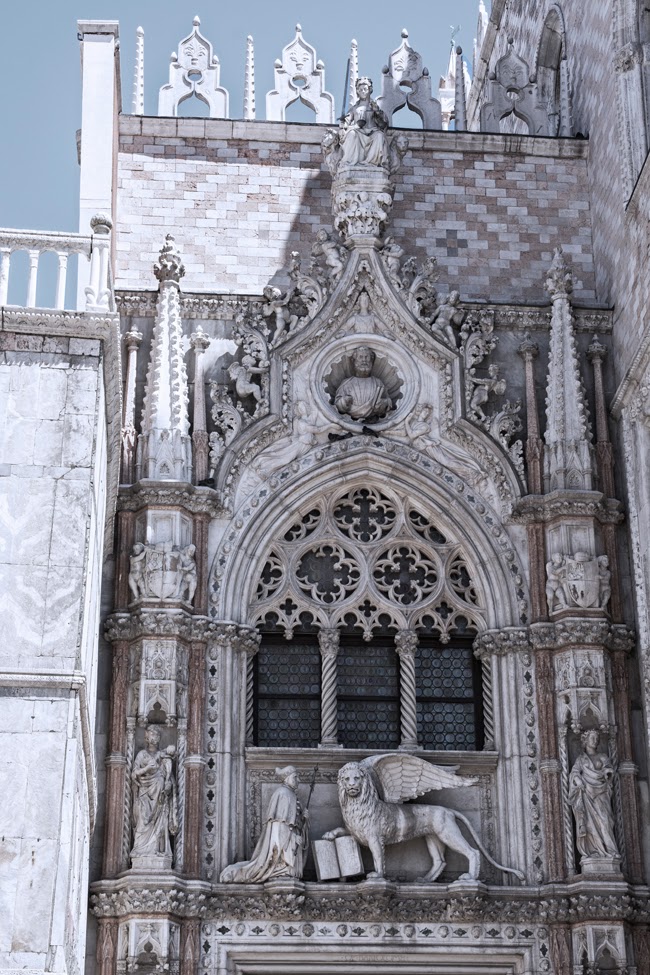
The most photographed corner of Doge Palace
Doge Palace Courtyard
View from Doge Palace gallery on San Marco Piazzetta
Doge Palace
The Doge Palace Courtyard
Ca' D'Oro
is the most magnificent palazzo on Grand Canal even without lost gilt decoration once adorned facade when it was built in 1428-1430 for the prominent Contarini family.
The city almost completely deserted by locals who gave up struggling with influx of tourists and left for good to the Mestre, mainland part of todays Venice.
Who could blame them. The whole infrastructure of a normal city like schools, grocery stores, doctors offices, small business, etc., etc. disappeared. The city largely became unlivable: hotels-restaurants-souvenir shops. Turning rapidly into a Disney theme park, a Veniceland, a dreadful perspective the current mayor of the city foresee as Venice’s inevitable future. This crucial decision expects to bring investments for restoration and sustaining. And what it would be: a lifeless architectural monument? Another make believe imitation as in Las Vegas? Those 60 thousands (out of 180 a few decades ago) still bravely holding the fort, host staggering 20 million tourists a year (!!!)
The fragile Serenissima is hopelessly defenseless against danger imposed not by floods and time, but by humans. Venice lives of tourism but the overwhelming numbers are killing her. Someone has coined the problem: "loving Venice to death". Impossible dilemma. UNESCO World Heritage officials call mass tourism outpour a double-edged sword. So much so.
A few years ago started the protesting movement No Grandi Navi against the colossal cruise ships, those huge sea monsters gangs that hoover over a tiny mermaid, spilling over about 50 000 tourists daily. Tourists that have only a few hours to checkmark the highlights and create a horrible stampede between San Marco and Realto.
There’s no such thing as strolling promised by the guide books. Slow leisurely walk and admiration is taken away, replaced by running for life or being smashed or flown with the crowd.
These giants in the lagoon cause major water displacement, vibration shock waves and tides are extremely damaging to centuries old buildings. And these daily invasions create havoc in space limited and extremely fragile city, as cruisers-paratroopers are running around wild, hardly having time to learn something about this unique place on Earth, just snapping photos and souvenirs. Who can possibly enjoy such a trip? No wonder the locals see us tourists barely as guests but more as a mob.
There are so many port of calls on Cruisers itineraries, why the most beautiful one has to suffer the most of all? Why these giants are allowed to come so dangerously close to the little golden fish.
Aerial view of Venice
Can’t help but I see it like the most hilarious scene from Finding Nemo, when ‘Dory Speaks Whale’. How I hope the ending won’t be the same one day.
At last some (very few) positive changes and restrictions demanded by the city were agreed upon by cruise industry moguls and will be slowly implemented by 2015. A partial but invaluable success of the rescue mission. The humble beginning brings the high hopes…
As to my Holiday wish.. oh how I’d love to greet the New Year in Venice, somewhere in dimly lit café, with my small family warming hands over the hot cups of delicious hot chocolate and see chocolate mustache on my son’s face… dreamy…
Venice is incredibly photogenic and
picture perfect from any angle, on every corner and every step at any season.
It’s a given and anyone who ever has been there at least once couldn’t agree more.
Since XVII century Venice became a
key destination for young nobles in their European Grand Tour , especially for
English gentlemen it was almost a must to crown an educational journey with a
prolonged stay in Venice. And they brought home a lot of knowledge: glittering
and grim, profound and superficial, reflecting on splendor and dark secrets,
with larger than life experience and confident they had seen it all.
Unforgettable memories.
Throughout centuries deeply
thoughtful and curious travellers left sketches in letters, diary notes, vivid
memoirs full of action and rear moments. Those threads of the past and
brilliant notions weaved over time a beautiful tapestry of Venetian history.
And though Venetians themselves a
known, like no one others, for documenting each and every tiny bit of their
political and material existence from the very beginning in VIII century, kept
and preserved in tons of paper in archives. All that is more of burocratic
facts interesting for researchers to reconstruct the story line how Venice came
to life and sustained it’s power and survived decline. But it would shed little
light on how they lived and what makes the essence of Venice, it’s soul, it’s
glory,it’s heart.
Wit and talented travellers, often succumbed to Venice’s charms, left wonderful mosaic evidence, their views on series of events with fairy tales and cruelty, legends, anecdotes, art and architecture.
This is where P.Ackroyd’s book about
Venice sprinkled with meaningful and bright quotes and full of astonishing facts
comes handy.
In the city where solid ground
surface is a luxury and a rarity, streets are extremely narrow and elaborately
intertwined in the narrowest alleys and passages. Only wealthy houses could
have hidden inner courtyards to escape secluded domestic life. And of course magnificent
palazzo like Ca Rezzonico had grand courtyards and even gardens.
Butfor common venetians balconies where a
walking luxury, a way to reach out, to see the beloved city, hear the neighbors,
find the news, eavesdropping for secrets, catch the gossip, feel the pulse of a daily life and
poke a nose into privacy of the nearest fellow citizens, quite often in arms
reach. As much as public life was bound and webbed with secrecy, the private life of venetians was very much deprived of privacy.
The cobble stone alleys, golden-ochre walls, green shutters were behind this jasper bib necklace, here
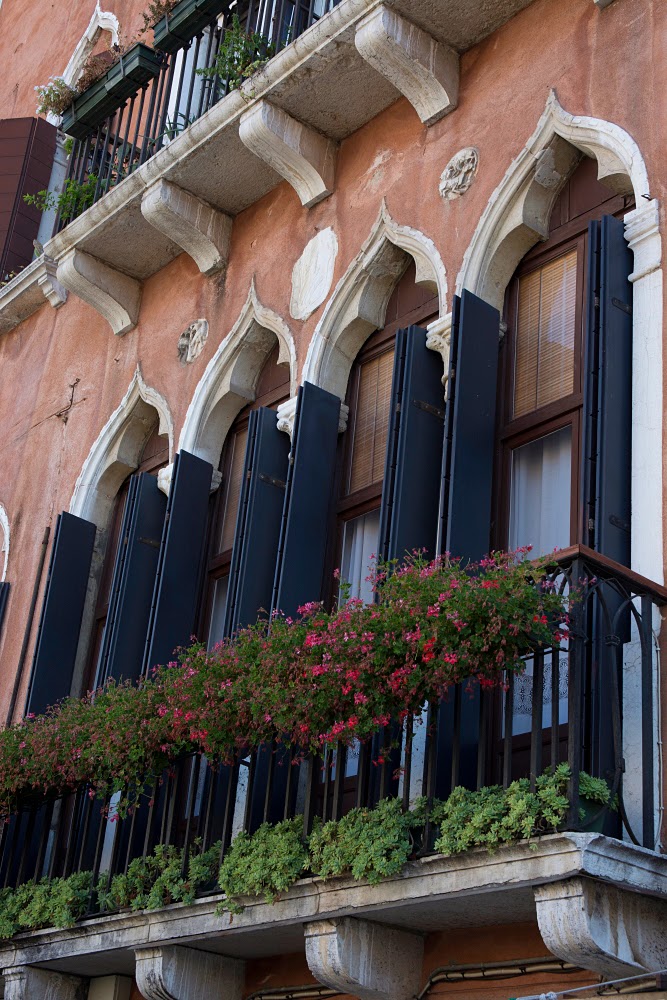
Venetian unique arched windows and lacey masonry of balconies deserve poetic ode to praise their beauty and crumbled charm. They are simply fascinating. It’s like looking Venice in her beautiful, mysterious eyes. Glass clad tall windows of palazzo, shimmering, thick and hardly transparent , often open in the night to show off splendor of the interior with frescoed ceilings and opulent venetian chandeliers.
The color palette of the walls inspired me to make this colorful glass necklace, here.
Or wide open in the summer heat the dwellings windows with flower boxes and crumbling, peeling shutters . Those facing canals have bright awnings: blue, green, striped, to smooth a bit sun’s harshness and almost unbearable brightness and shiness of waters splashing and sparkling at your feet. But who would complain?
The grandeur of Palazzo Rezzonico
How I love this antique glass shimmering with rainbow sunset colors .
It’s so easy to believe that in old times the hardest crime in Venice was to betray Venice in some way (not even a slightest remark or critique) and it was the harshest punishment not to be executed but to be expelled from the city forever. Nothing at all could be harder for a venetian than not ever to be there to see this glorious beauty again...